 Envio gratuito: Encomendas da Irlanda superiores a €50 | Reino Unido e Europa superiores a €100.

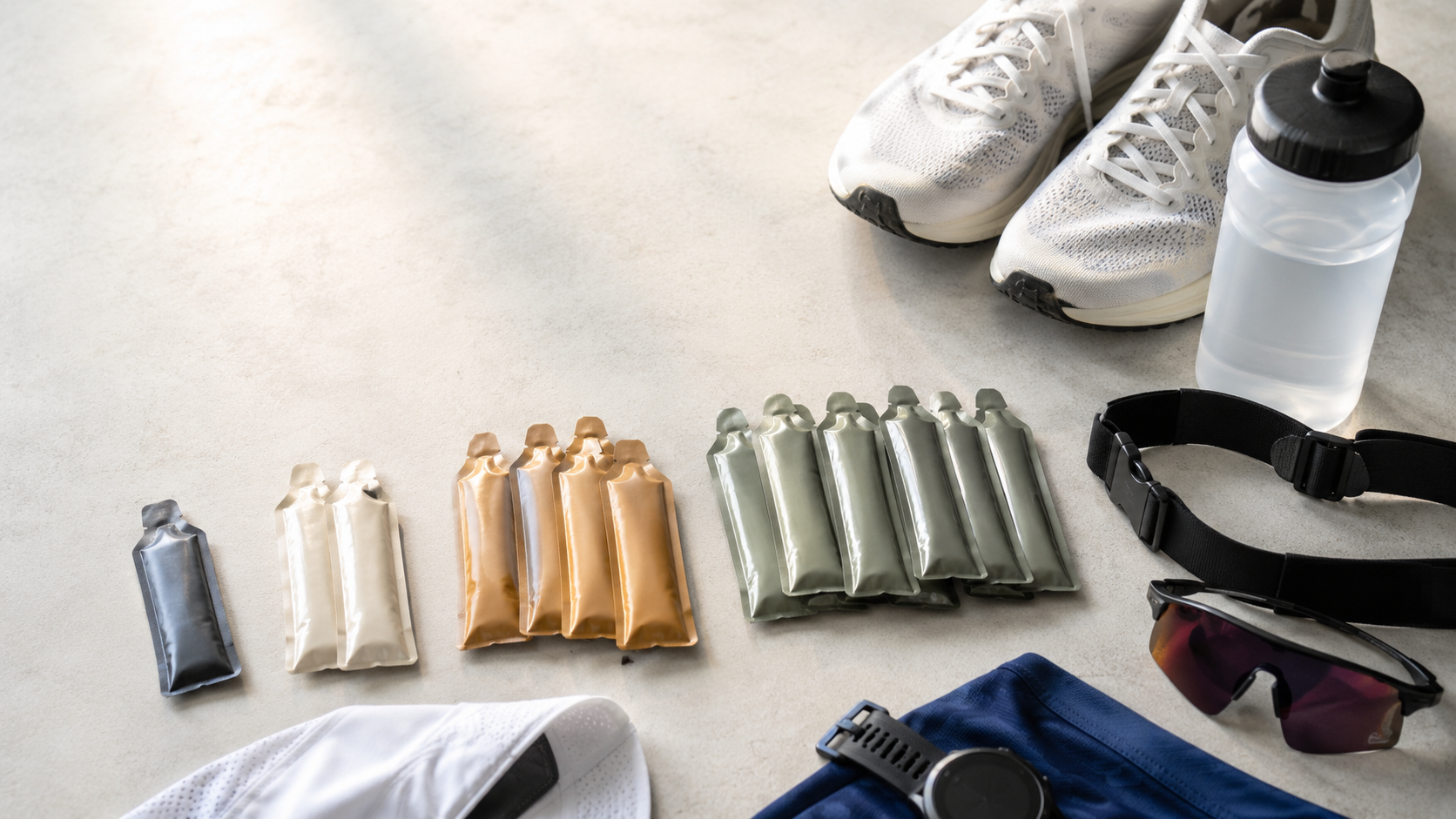
Most runners and triathletes do not need a complicated fueling spreadsheet for every race. They need a simple answer to a very practical question: how many energy gels should I carry?
The honest answer depends on race duration, how much carbohydrate is already in your drink, how well your gut is trained, and whether caffeine is useful for that specific event. A gel is not magic; it is just a compact way to carry carbohydrate when normal food is awkward.
This guide is for athletes choosing fuel for 10K, half marathon, marathon, and Olympic-distance triathlon racing. For long-course triathlon or very high carbohydrate targets, read our separate guide to building a 90g/hour triathlon fueling plan.
Quick Answer: Gel Counts by Race Distance
| Race | Typical finishing time | Practical gel starting point | Main goal |
|---|---|---|---|
| 10K | 35-75 minutes | 0-1 gel | Usually optional; useful if you start under-fuelled or want caffeine |
| Half marathon | 75-150 minutes | 1-3 gels | Keep carbohydrate available once the race passes about an hour |
| Marathon | 2.5-5+ hours | 3-8 gels | Build toward a steady carbohydrate intake you have practised |
| Olympic triathlon | 2-4 hours | 2-5 gels, often mostly on the bike | Fuel the bike well enough to run without a late energy drop |
These are starting points, not rules. A 90-minute half marathon and a 2-hour 20-minute half marathon are different fueling problems. A marathoner taking carbohydrate drink at every aid station may need fewer gels than someone drinking plain water.
Why Race Duration Matters More Than Distance
Sports nutrition guidance commonly recommends carbohydrate during longer endurance exercise, with higher hourly intakes becoming more relevant as duration increases. Reviews and consensus guidance generally support around 30-60g carbohydrate per hour for many events lasting beyond about an hour, with 60-90g/hour used in longer events when athletes have trained the gut and use suitable carbohydrate sources.
That does not mean every athlete should chase 90g/hour in every race. It means the longer the race gets, the more important it becomes to avoid drifting into a carbohydrate deficit.
10K: Usually Optional, Sometimes Useful
For most well-fed runners, a 10K does not require a gel during the race. If you have eaten well beforehand and the race is under an hour, the benefit is usually small.
A gel can still make sense if:
- the race starts very early and breakfast was limited;
- you are racing hard after a long warm-up;
- you want a caffeinated gel and already know you tolerate it;
- you are using the race as a practice event for longer goals.
A simple approach is to take one gel 10-20 minutes before the start, then drink to thirst during the race. Do not test a new caffeinated gel for the first time on race morning.
Half Marathon: One to Three Gels Is Usually Enough
The half marathon is where gels start to become useful for many runners, especially once the race is likely to last more than 75-90 minutes.
A practical pattern:
- 75-90 minutes: 1 gel around 35-45 minutes may be enough.
- 90-120 minutes: 2 gels, often around 35-45 minutes and 70-80 minutes.
- 120-150 minutes: 2-3 gels, depending on your drink intake and gut tolerance.
If you struggle with thicker gels, a more fluid option such as GoldNutrition Hydra Gel or HIGH5 Energy Gel Aqua can be easier to take at race pace. If you prefer a compact carbohydrate hit, compare options in the Energy Gels collection.
Marathon: Think in Grams per Hour, Then Convert to Gels
For marathon racing, it is better to think in carbohydrate per hour first, then convert that target into gels.
Example:
- If your target is about 45g/hour and your gel provides around 20-25g, that usually means about 2 gels per hour.
- If your target is about 60g/hour, you might combine gels with sports drink, or use larger carbohydrate gels.
- If your target is above 60g/hour, practise it carefully in long runs before race day.
A first marathon plan does not need to be heroic. Many athletes do better with a steady, practised intake than with an aggressive plan they cannot tolerate after 30km.
Useful store options by use case include HIGH5 Energy Gel for a simple gel format, GoldNutrition Long Lasting Energy Gel for athletes who prefer that style, Nduranz Energy Gel 45g with Caffeine when a larger caffeinated serving fits the plan, and Precision Fuel & Hydration PF 30 Caffeine Gel when you want a measured 30g carbohydrate plus caffeine option.
Olympic Triathlon: Fuel the Bike So the Run Does Not Unravel
In Olympic-distance triathlon, the bike leg is usually the easiest place to take in carbohydrate because breathing is calmer and carrying fuel is simpler. The swim is not an opportunity to fuel, and many athletes find it harder to take gels once the run intensity rises.
A practical starting point:
- one gel or carbohydrate drink early on the bike;
- one gel midway through the bike;
- one optional gel late on the bike or early on the run if you tolerate it well;
- use plain water or sports drink depending on heat, aid stations, and sodium needs.
If your Olympic triathlon will take closer to four hours than two, your plan may look more like a short long-course fueling strategy. If it will take around two hours, you may only need a few well-timed servings.
When a High-Carb Gel Makes Sense
High-carb gels are useful when you want fewer items to carry or when you are deliberately targeting higher carbohydrate intake. They are not automatically better for every race.
Consider a higher-carbohydrate option when:
- you are racing marathon, 70.3, long-course triathlon, or a long sportive;
- you have trained your gut to handle larger servings;
- you prefer fewer packets in your shorts, belt, or bike setup;
- you understand how much fluid you need alongside the product.
Examples in the store include Maurten Gel 160, Precision Fuel & Hydration PF 90 Gel, and Nduranz Energy Gel 45g. Choose these because they fit the plan, not because a bigger number always means a better race.
Caffeine Gels: Useful Tool, Not an Automatic Upgrade
Caffeine can be useful for some endurance athletes, but it is easy to overdo when gels, drinks, and coffee all stack together. If you use caffeine, count the total amount from all sources and practise the timing before race day.
A cautious approach is to reserve caffeine for the later part of a half marathon or marathon, or the second half of the bike/run in triathlon. Athletes who are caffeine-sensitive, anxious before races, or prone to gut issues should be especially careful.
How to Test Your Gel Plan Before Race Day
- Choose the race duration: estimate realistic finish time, not dream pace.
- Pick an hourly target: lower for shorter races, higher for longer events.
- Convert to products: gels plus sports drink should add up to the target.
- Practise at race intensity: long easy runs are useful, but race pace changes gut comfort.
- Keep notes: timing, fluid, flavour fatigue, caffeine, and stomach response.
The IOC consensus statement on supplements and sports foods is clear in principle: products should be trialled in training or simulated competition before they are used in competition. Race day is for executing the plan, not discovering whether a new gel works for you.
FAQs
Do I need an energy gel for a 10K?
Usually no, if you are well fed and racing under about an hour. One pre-race gel may be useful if breakfast was limited, the race starts early, or you are deliberately practising for longer events.
How many gels should I take for a half marathon?
Most athletes will start with 1-3 gels, depending on finish time, pace, and what they drink on course. Faster runners may only need one; longer-duration athletes may benefit from two or three.
How many gels should I take for a marathon?
Many marathoners land somewhere between 3 and 8 gels, but the better method is to set a carbohydrate-per-hour target and then convert that target into gels and drink. Practise the plan before race day.
Should I use caffeine gels?
Caffeine gels can help some athletes, but they are not automatically better. Count total caffeine from coffee, drinks, and gels, and test the timing in training.
Can I mix gels and drink mix?
Yes. Many athletes combine gels with sports drink, especially in triathlon. Just count the carbohydrate from both sources so the total plan makes sense.
Shop the Fueling Options
Build your race plan from products that match the event, your gut, and your carrying setup. Start with the Energy Gels collection, compare broader Fuel & Energy options, and use our race-morning breakfast guide to make sure the final few hours before the start support the plan.
Evidence and Further Reading
- A Step Towards Personalized Sports Nutrition: Carbohydrate Intake During Exercise
- IOC consensus statement: dietary supplements and the high-performance athlete
- Carbohydrate and exercise performance: the role of multiple transportable carbohydrates
- Carbohydrates and Endurance Exercise: A Narrative Review
Research note: Carbohydrate guidance is context-dependent. Higher hourly targets are most useful in longer events and should be practised. Individual gut tolerance, caffeine sensitivity, heat, aid-station access, and total carbohydrate from drinks all change the right gel count.